

مؤلف
ماري ر. وينترز


Neither option wins everywhere. Your business context decides. Three factors settle the paper pouch packaging question: where the pouch ends up, your sustainability goals, and your budget. A biodegradable flat pouch suits one brand. A recyclable stand-up pouch suits another. The recyclable vs compostable packaging debate has no single winner.
One risk deserves attention now. You cannot label a pouch "compostable" or "recyclable" without certification. Regulators treat uncertified claims as greenwashing. Penalties follow.
This post gives you a practical framework. You will learn how to match pouch format to product, market, and budget. No vague "it depends" answers.
Match the pouch type to your local waste system.
Certification proves each environmental claim.
Compostable pouches cost more than recyclable ones.
Recyclable pouches work best where paper recycling exists.
Compostable and recyclable are not the same kind of promise. Compostable is an end-of-life claim. It tells the buyer that the material will break down under specific conditions. Recyclable is a recovery-system claim. It tells the buyer that a system exists to collect and reprocess the material. These two claims follow different rules, and they fail in different ways.
A technically recyclable pouch can still land in a landfill. The material may pass a lab test, but your customer may have no curbside program that accepts it. A certified compostable pouch faces the same risk. If your region lacks industrial composting, that pouch goes to the trash. The label stays true on paper. The outcome still misses the goal. This gap between claim and reality shapes every decision you make about paper pouch packaging.
Industrial composting and home composting are not interchangeable. Industrial facilities run at controlled high heat, roughly 55–60°C, with managed aeration and moisture. Materials break down in 90–180 days. Home bins sit at ambient temperatures of 20–30°C with inconsistent turning and moisture. Degradation takes 6–12 months or longer.
|
Feature |
Industrial Composting |
Home Composting |
|---|---|---|
|
Temperature |
55–60°C |
20–30°C, fluctuates |
|
Degradation time |
90–180 days |
6–12 months or longer |
|
Certifications |
EN 13432 / ASTM D6400 |
OK Compost HOME |
|
Access |
Curbside organics collection |
Individual backyards |
A biodegradable flat pouch certified for industrial conditions will not break down in a backyard bin. Only OK Compost HOME certification proves a compostable paper item belongs in home systems. Check which certification your compostable packaging carries before you print any environmental claims.
A recyclable stand-up pouch depends on paper recycling infrastructure. Your pouch may carry recyclable paper labeling, yet the local paper recycling stream may reject it. Contamination, coatings, and mixed materials all cause rejection. When recycling and composting infrastructure is weak, a high recycled content pouch often recovers better than a compostable one. The recyclable vs compostable packaging choice therefore hinges on what your market actually collects. Verify local acceptance before you commit to recyclable or compostable packaging.
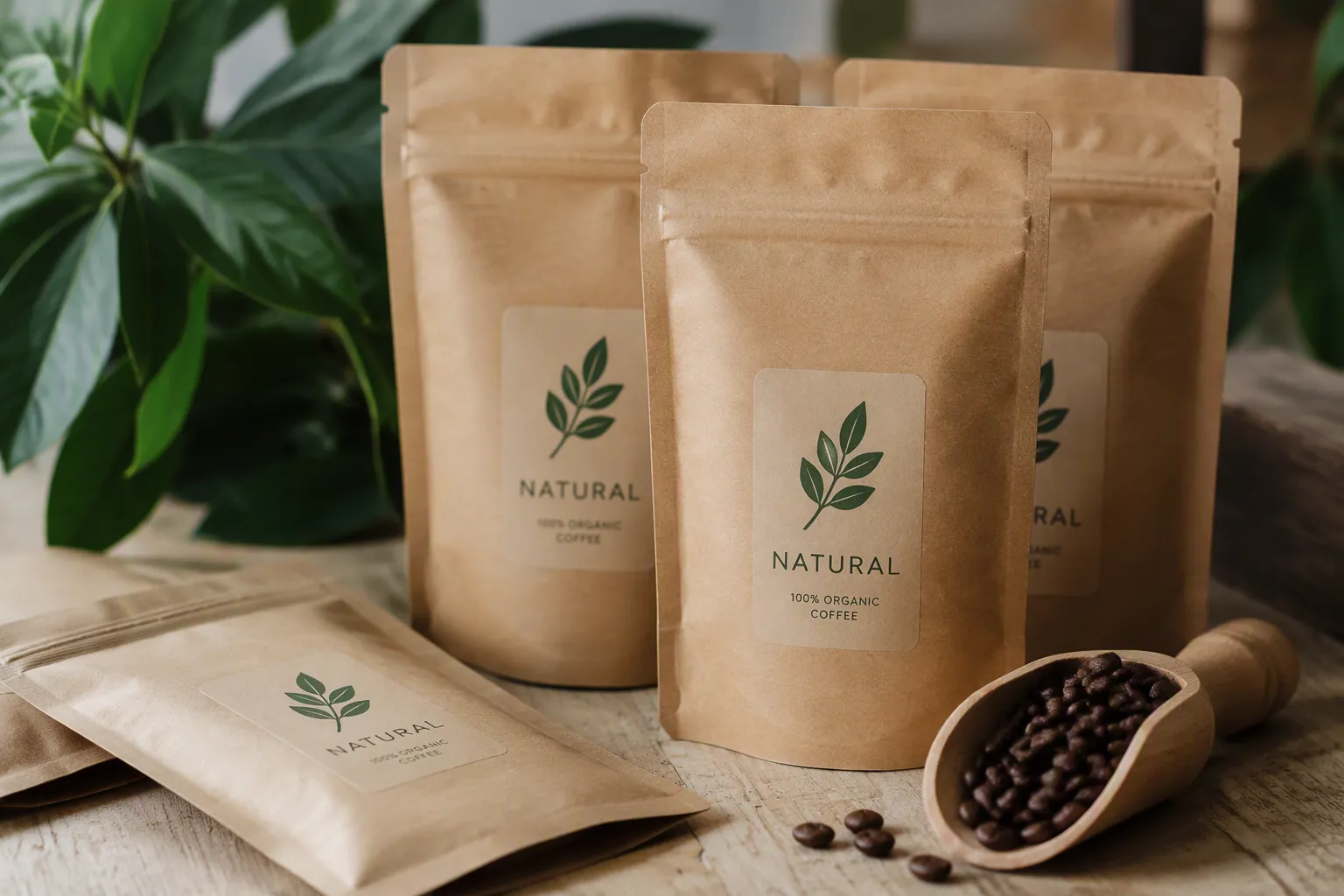
The real end-of-life path for any pouch depends on local infrastructure. A biodegradable flat pouch needs industrial composting within reach. A recyclable stand-up pouch needs a paper recycling stream that accepts it. A recycled paper bag with high recycled content needs the same recycling access. Without that access, all three options share the same fate: landfill.
When recovery systems fail, compostable packaging often performs worse than high-PCW recyclable paper. Compostable films rely on virgin fossil fuel and agricultural resources. Their combined footprint often exceeds that of packaging made from recycled paper. Compostable paper that ends up in landfill contributes to methane emissions and lacks material circularity. Recyclable paper packaging aligns with existing recovery infrastructure and typically results in a lower overall carbon footprint. High PCW recyclable paper also provides better durability and product protection, which reduces damage and reships. That durability further lowers environmental impact.
You must weigh the advantages and disadvantages of recycling and composting for your specific market. A region with strong paper recycling but no industrial composting favors recyclable options. A region with curbside organics collection favors compostable options. Understanding the difference between recyclable and compostable packaging starts with this infrastructure check.
Cost shapes the recyclable vs compostable packaging decision. Compostable materials can cost up to 10 times more to produce than conventional alternatives. Switching to compostable packaging typically raises costs by 20%–30% per unit. In one illustrative case, the unit price increases from $0.23 to $0.41, a difference of $0.18 per unit. That gap can significantly impact profit margins for high-volume orders.
|
Product Category |
Plastic Unit Cost (per 1,000) |
Biodegradable Unit Cost (per 1,000) |
Premium % |
|---|---|---|---|
|
Hinged container 500ml |
$45–60 |
$55–75 |
20–30% |
|
Hot cup 12oz |
$35–45 |
$40–55 |
14–22% |
|
Cold cup 16oz |
$30–40 |
$50–65 |
50–66% |
|
Cutlery set |
$20–30 |
$38–50 |
60–90% |
|
Food tray (single compartment) |
$25–35 |
$35–48 |
30–40% |
|
Clamshell salad container 750ml |
$55–70 |
$68–85 |
18–25% |
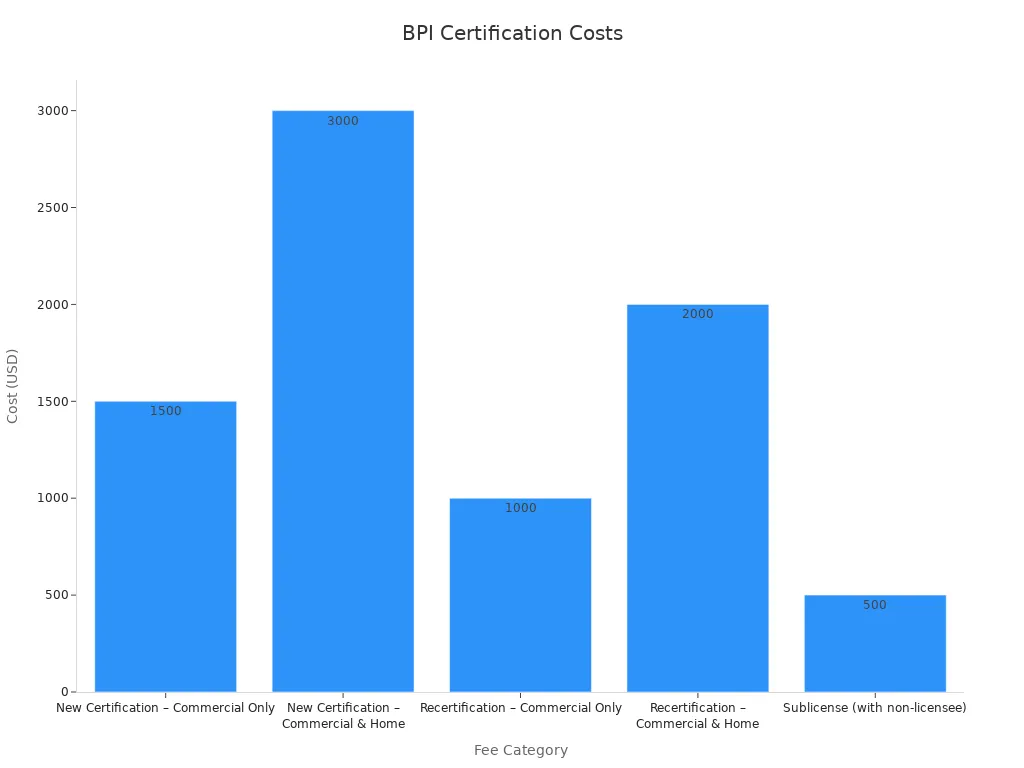
Certification adds another layer. The BPI application fee is $1,500 for a Commercial Only certificate and $3,000 for a combined Commercial and Home Compostability certificate. Laboratory testing fees are charged separately and typically add several thousand dollars. The certification process takes several months. Certificates remain valid for three years, with recertification costing $1,000 per certificate.
Consumers tend to prefer recyclable packaging over compostable in some studies. That preference matters for your brand. A recyclable stand-up pouch with clear paper recycling instructions may win more customer trust than a compostable pouch with confusing disposal rules. You must make three distinct environmental claims carefully: compostable, recyclable, and recycled content. Each claim requires its own proof. Recycled content claims need documentation of post-consumer waste percentages. Compostable claims need certification. Recyclable claims need local acceptance verification. Your paper pouch packaging strategy must match the claim to the evidence.
Three questions guide your choice. Where will the pouch end up? What do your goals demand? What does your budget allow? Answer these honestly, and you remove the guesswork from the recyclable vs compostable packaging decision. Start with the first question because it overrides all others.
Your pouch ends where your customers live. A residential area with curbside paper recycling accepts recyclable stand-up pouches. A city with industrial organics collection handles certified biodegradable versions. Check local waste infrastructure before you pick a material. If paper recycling dominates your market, choose recyclable packaging. If organic waste collection exists, consider biodegradable options. One answer does not fit every region. This simple check prevents costly mistakes.
Product type also matters. Compostable packaging works well for food and organic products. This type handles moisture effectively. Do not use biodegradable options for household cleaners. Those products add toxins. Recyclable packaging requires customers to clean food residues. Sauce packets and sticky food bags need thorough rinsing. Many customers skip this step. That pouch then contaminates the recycling bin. A mismatch between material and customer behavior undermines your sustainability efforts.
Consumer understanding makes or breaks your choice. Clear labeling helps customers differentiate. Print disposal instructions directly on the pouch. A biodegradable flat pouch with vague rules confuses buyers. A recyclable stand-up pouch with "recycle clean and dry" guides them correctly. This step aligns with your audience's values and builds connection.
Infrastructure varies by region. This fact makes disposal challenging. A national brand cannot assume one system works everywhere. Pick the system that works for your largest market. Then label accordingly. This approach builds trust. Customers reward brands that make disposal easy.
The recyclable vs compostable packaging question depends on where your customers dispose. Check your top three markets. Verify what their systems accept. Then make your choice.
Your sustainability goals set direction. Your budget sets limits. Even a small unit cost difference compounds across thousands of orders. Recognize that the recyclable vs. compostable flexible packaging debate involves a clear cost trade-off. Compostable materials cost up to 10 times more than conventional alternatives. Recyclable packaging has lower material and infrastructure costs. A high-volume brand must calculate that difference. A small producer may absorb the premium for environmental claims.
Long-term trends shift the calculation. Rising demand for biodegradable materials may lower future costs. Fines for non-compliance make some brands switch early. Decide whether to pay extra now or later. This depends on cash flow and risk tolerance. Monitor regulatory changes. New laws may restrict certain materials. Early adopters gain advantage.
Your sustainable packaging goals shape material selection. Recyclable packaging keeps materials in use. This aligns with circular economy principles. Biodegradable options return materials to soil. Both paths are valid. Pick the one that matches your brand promise. If customers already compost food scraps, consider biodegradable. If your budget is tight and your region has strong paper recycling, choose recyclable or compostable packaging options that include recycled content. Recyclable pouches with high recycled content offer cost savings and environmental benefits. Consider your brand image. Some consumers seek biodegradable packaging. Others prefer recyclable. Know your audience.
Whether you choose recyclable vs compostable packaging, Bioflexi helps match pouch format to your product, market, and budget. We assess your distribution region, cost constraints, and certification requirements. We look at your specific context. We recommend a format. One conversation clarifies your path forward. You avoid guesswork and greenwashing risk.
A compostable claim needs third-party proof. In North America, BPI certifies against ASTM D6400 for plastics and ASTM D6868 for paper. In Europe, TÜV Austria issues OK Compost INDUSTRIAL under EN 13432. Both confirm 90% biodegradation within 180 days and 90% disintegration in 12 weeks. EN 13432 applies stricter heavy metal limits and requires that the material must not harm compost quality. BPI suits US and Canadian municipal programs. OK Compost INDUSTRIAL suits European markets. For home systems, only OK Compost HOME qualifies.
Build a claim-to-proof matrix before you print anything. Each environmental claims statement needs a matching certificate, test report, or supplier declaration on file. A recyclable claim needs local paper recycling acceptance, not just a lab result. Run a compostability or recyclability assessment for every SKU. This step protects you when a regulator or retailer asks for documentation.
Vague terms create legal exposure. Words like eco-friendly, green, plant-based, and biodegradable carry no fixed meaning. Biodegradable applies to most materials given enough time, so it misleads buyers. Carbon neutral claims often rely on offsets without accounting for all emissions. Made with recycled content highlights one attribute while hiding broader impact.
Packaging labeled "compostable" must be accepted by most composting facilities, and claims must be supported by third-party certification. California SB 343 allows penalties up to $10,000 per day.
Enforcement is real. California settled with Overstock.com for $27,000 in 2017, Walmart for $940,000 in 2017, and Amazon for $1.5 million in 2018 across 23 district attorneys. Never label a biodegradable flat pouch or recyclable stand-up pouch compostable without certification. The recyclable vs compostable packaging choice demands honest labels. Uncertified environmental claims on a certified compostable product still count as greenwashing. Treat every compostable, recyclable, and recycled-content statement as a separate claim with its own evidence.
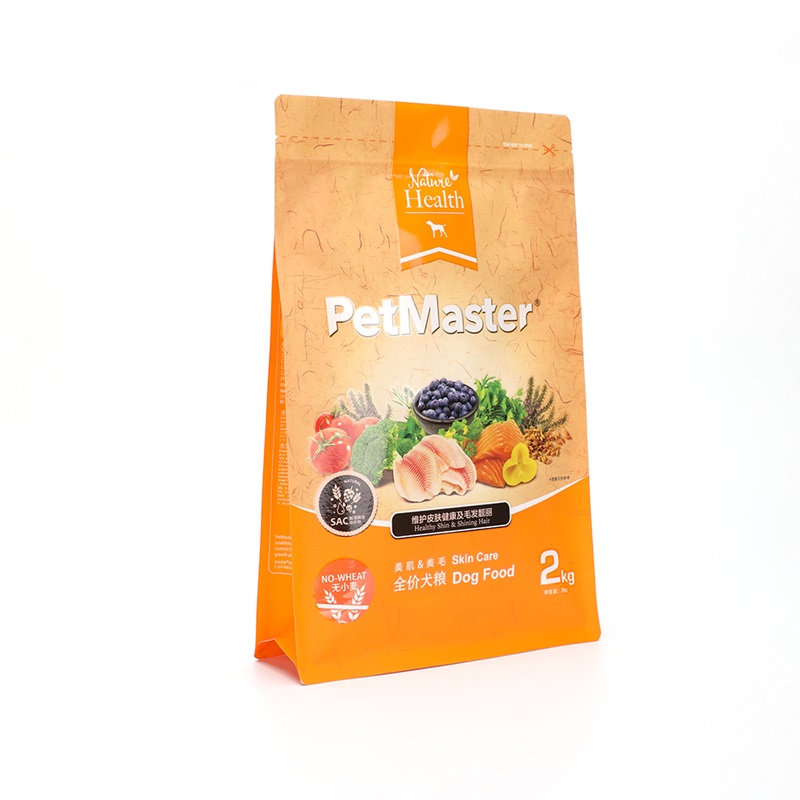
Dry snacks demand strong barrier protection. A compostable food paper pouch must block moisture and oxygen to keep contents crisp. Multi-layer compostable film with a high-barrier cellulose core meets this need. The table below shows the performance values that support a 12-month shelf life.
|
Barrier Property |
Required Value / Performance |
Notes |
|---|---|---|
|
Moisture (WVTR) |
0.42 g/m²/day |
Keeps snacks crispy up to 12 months |
|
Oxygen (OTR) |
0.48 ml/m²/day |
Compostable Kraft Bag value |
|
Oxygen (OTR) |
< 0.5 cc/m²/24h/atm |
ASTM-tested compostable barrier |
These figures apply to compostable paper built for industrial composting. A biodegradable flat pouch with this barrier structure suits chips, nuts, and dried fruit. Where industrial composting is available, this format delivers both protection and a certified end-of-life path. Where recycling streams are strong, a recyclable stand-up pouch with a similar barrier layer often serves the same snack category at lower cost.
Customer expectations shift by region. A survey in Italy examined how shoppers view food packaging sustainability. The findings reveal what your buyers actually notice.
Consumers paid more attention to product information (expiration date, nutrition, origin) than to packaging details.
Among packaging information, the collection type mattered most, followed by materials and sustainability symbols.
Shoppers wanted clearer, larger symbols and more detail on how to recycle packaging.
Interest in QR codes and environmental impact phrases was significantly lower.
This pattern shapes your label design. Italian shoppers want disposal instructions front and center. They care less about digital tools. If your market resembles this profile, print the collection type clearly on every compostable paper pouch. The recyclable vs compostable packaging decision then rests on what your region collects. Strong paper recycling favors recyclable food paper. Curbside organics collection favors compostable packaging. Match the material to the system your customers already use.
Recyclable food paper outperforms compostable options when your market already collects paper. Curbside programs accept recyclable stand-up pouches in most North American and European cities. Industrial composting remains rare by comparison. You gain recovery access without building new collection routes.
The numbers favor recyclable paper in these regions. Recycled cardboard costs 5–15% less than virgin cardboard, or the same price. Lightweight paper cuts shipping weight and saves 10–15% on shipping expenses. Standardized paper packaging also reduces carrying costs by 25%. Compostable materials rarely match that weight reduction.
|
Scenario / Factor |
Recyclable Paper Packaging |
Compostable Alternatives |
|---|---|---|
|
Unit material cost |
Recycled cardboard is 5–15% cheaper than virgin cardboard, or equal price |
Compostable mailers carry a 5–15% premium ($0.15–$0.30/unit vs. $0.10–$0.25) |
|
Shipping cost impact |
Lightweight paper reduces shipping weight, saving 10–15% on shipping expenses |
Compostable materials may not achieve the same weight reduction |
|
Waste disposal cost |
Traditional disposal: $30–$100 per ton |
Compostable recycling: $20–$40 per ton |
|
Storage/inventory |
Standardized paper packaging reduces carrying costs by 25% |
Compostable materials may require separate handling/storage |
|
Annual TCO savings |
10–20% total cost reduction possible for small businesses |
Premium unit cost must be offset by brand loyalty and repeat purchase rates |
|
ROI timeline |
Immediate for recycled cardboard (no cost premium) |
3–6 months through customer loyalty improvements |
High-volume brands feel every cent of unit cost. Three real cases show how recyclable paper wins on total cost of ownership.
A small cosmetics brand shipping 100 orders monthly paid $0.73 per shipment ($876/year) for traditional packaging. After switching to recycled cardboard boxes at $0.48 per unit plus biodegradable mailers and cornstarch peanuts, the total reached $0.74 per shipment ($888/year) — a negligible $12 annual increase. Customer repeat rate rose 8%, generating $5,760 in extra annual revenue and a net first-year benefit of $5,689.
An e-commerce business shipping 2,000 orders monthly paid $6.00 per unit ($144,000/year). Right-sizing with lighter recyclable boxes and molded pulp inserts dropped costs to $4.80 per unit ($115,200/year) — a direct savings of $28,800 per year, a 20% reduction.
Recyclable paper packaging wins on total cost of ownership when you already use cardboard, can cut shipping weight, and factor in waste disposal costs. Compostable alternatives carry a unit-cost premium that requires brand loyalty gains to offset.
"Sustainable packaging is often genuinely cheaper. Molded pulp costs 65% less per unit than plastic. Recycled cardboard costs the same or less than virgin cardboard. However, the key is calculating the total cost of ownership (shipping, waste disposal, inventory, compliance), not just material cost. When you factor in everything, sustainable solutions often deliver 10-20% annual cost savings for small businesses."
Bioflexi offers recyclable paper pouch options built for high-volume brands. These pouches use high recycled content and work with standard paper recycling streams. You avoid the compostable premium while keeping a certified recyclable claim. For brands weighing recyclable vs compostable packaging, this path delivers immediate ROI and dependable recovery.
Your choice depends on your context, and that answer is not vague. It is a decision you can make today. Run this quick self-check: Where will the pouch end up? What do your goals and budget allow? Which claim can you certify? A biodegradable flat pouch fits markets with organics collection. A recyclable stand-up pouch fits strong paper recycling streams. Either way, certification and honest labels protect your brand from greenwashing penalties. The recyclable vs compostable packaging decision rewards brands that verify before they print. Bioflexi will match a pouch format to your product, market, and budget. Contact us for a recommendation.
Start with where your customers dispose of packaging. Strong paper recycling in your market favors a recyclable stand-up pouch. Curbside organics collection favors a compostable option. Your budget and sustainability goals then narrow the final pick.
In North America, BPI certifies against ASTM D6400 for plastics and ASTM D6868 for paper. In Europe, TÜV Austria issues OK Compost INDUSTRIAL under EN 13432. Only OK Compost HOME proves home composting suitability. Never print a compostable claim without a matching certificate on file.
Compostable materials can cost up to 10 times more to produce than conventional alternatives. Unit prices typically rise 20%–30%. A BPI Commercial Only certificate costs $1,500, and a combined Commercial and Home certificate costs $3,000. Lab testing fees add several thousand dollars more.
No. A recyclable claim needs verified local paper recycling acceptance, not just a lab result. Run a recyclability assessment for every SKU. Keep the documentation on file. Uncertified claims expose your brand to greenwashing penalties under laws like California SB 343.
Print clear disposal instructions directly on the pouch. Use phrases like "recycle clean and dry" for a recyclable stand-up pouch. For a biodegradable flat pouch, state the required composting method. Clear labels reduce contamination and build customer trust in your sustainability claims.
إذا كنت ترغب في العمل معنا أو مجرد التواصل معنا، يسعدنا أن نسمع منك!

حقوق الطبع والنشر
@ 2026 Shanghai BioPouches Co., Ltd جميع الحقوق محفوظة
. الشبكة المدعومة
ترك رسالة